flagship

UNBOUND

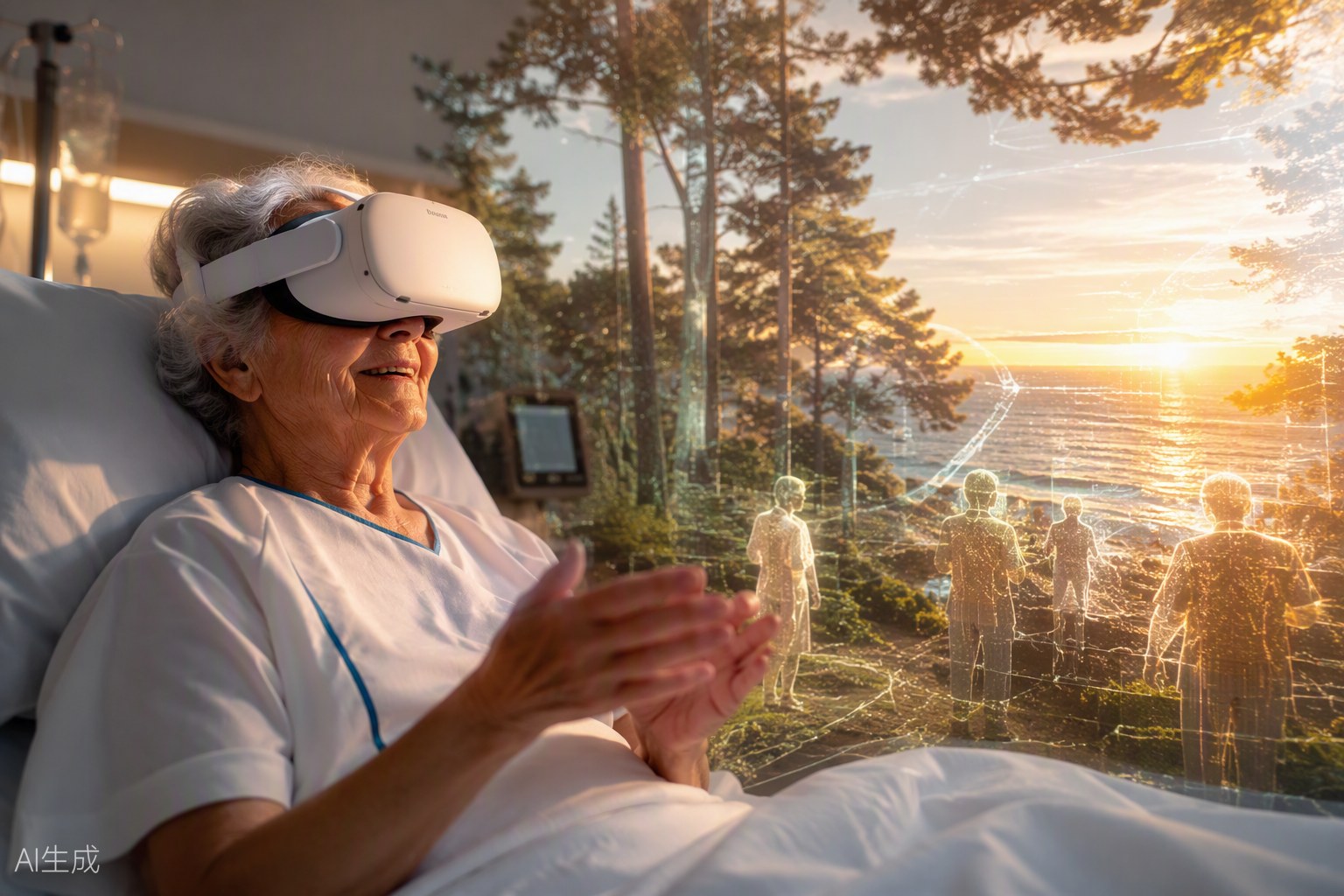
UNBOUND is a multiplayer VR/XR platform built for hospitals. Staff schedule a session, the patient puts on a lightweight headset — and within seconds they are standing in a shared world, side by side with other patients. Quiet forests, sunset seashores, futuristic towns, chess nights, seaside cycling, live concerts — staffed by AI companions trained for care.

UNBOUND

The Problem — Life Shrinks to Four Walls

Bedridden and long-term patients spend weeks — sometimes months — inside the same room. Cut off from friends, nature and ordinary life, isolation sets in: loneliness is linked to depression, slower recovery and higher mortality.

  • 35.7M hospital admissions in the US every year
  • 61% of care-home residents feel moderately lonely — 35% severely lonely
  • +14% higher mortality risk associated with moderate loneliness in residential care

The Solution — One Headset, a Whole World of People

  • Choose a world — a quiet forest, a sunset seashore, or a futuristic town, each designed for calm and wonder
  • Meet and talk — lifelike avatars, natural voice chat, real conversations with patients from other wards and hospitals
  • Play and explore — chess nights, seaside cycling, scenic drives, even flying a plane

Signature Feature — AI Companions Trained for Care

Beyond other patients, UNBOUND is staffed by AI-powered 3D characters — each specially trained for a clinical role, each speaking the patient's own language. Between human visits, no one is ever alone.

  • Physical therapy coach — leads guided rehabilitation, demonstrates movements, paces each exercise
  • Psychological support — always-present companion for conversation, calming and breathing exercises
  • Guide and host — welcomes new patients, teaches controls, recommends worlds and events

Clinical Evidence — VR Is Proven Pain Relief

UNBOUND sits on a decade of peer-reviewed clinical research into immersive VR as a non-drug pain and anxiety intervention. More than 110 AR/VR medical devices have been cleared by the US FDA since 2015.

  • 35–50% lower reported pain during burn wound-care procedures with VR
  • 60% drop in subjective pain ratings in a single 5-minute VR session (Jones et al.)
  • 65% of hospitalized VR patients achieved a pain response vs 40% watching TV (Cedars-Sinai)

Business Model — Three Revenue Streams, One Contract

  • Facility subscription — annual SaaS licence per hospital or care home, tiered by beds and headsets ($24–48K/facility/year, ~85% margin)
  • Hardware and onboarding bundle — headset kits, hygiene stations, staff training and installation
  • Live events and sponsorships — revenue share on artist concerts, sponsored worlds and branded experiences

Traction and Roadmap

Working prototype ready today — multiplayer lobby, three worlds, full-body avatars and voice are already built. This round funds clinical pilots and go-to-market, not basic R&D.

  • Months 0–6: clinical pilots with 3–5 partner hospitals, first outcome data
  • Months 6–18: first revenue, 50+ facilities, first artist collaboration concert
  • Months 18–36: elderly care homes join; intergenerational family visiting rooms
  • Months 36+: European entry, recurring event seasons, insurance dialogue

What do you think?

Like or dislike this project.

Comments